

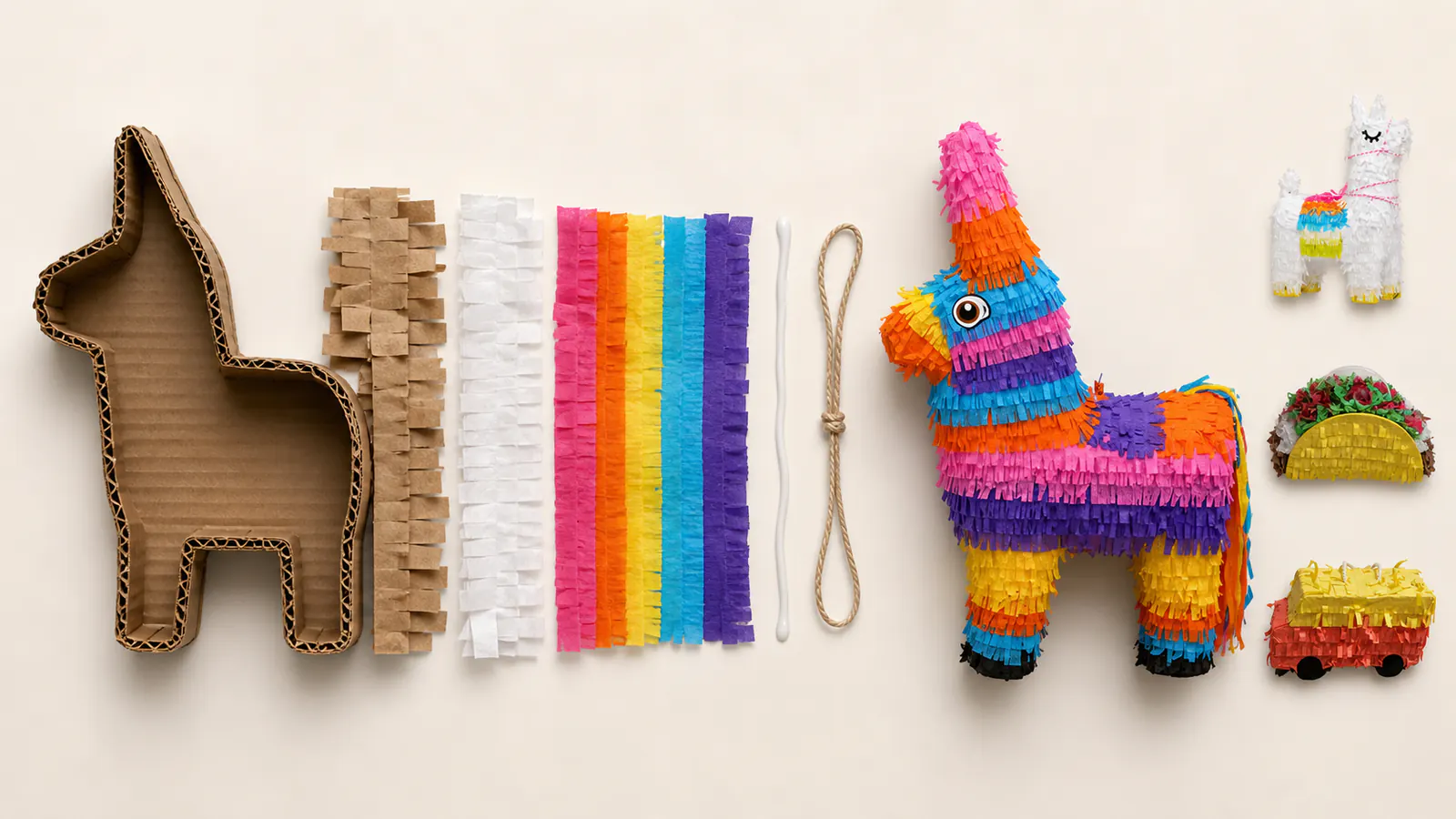
What are pinatas made of? Most use a paper-based hollow structure, colored decorative paper, adhesive and a small set of functional parts.
A product photograph mainly shows the colored surface. The buyer cannot see the structure that holds the shape, the way attachments connect, the filling access or the hanging and release components. Those hidden choices affect use, hand production and packing.
It is also easy to over-specify material names without improving the order. A buyer usually needs to know what the material must do: hold the approved shape, accept paper decoration, remain suitable for the intended mechanism and survive the agreed transport and storage conditions.
This guide explains the material system in practical terms and shows which questions belong in the sample rather than pretending one recipe fits every pinata.
The main material groups
| Material group | Job in the product | Buyer-visible result |
|---|---|---|
| Paperboard or corrugated structure | Creates the hollow body and supports the silhouette | Shape, depth, handling and opening behaviour |
| Tissue, crepe or decorative paper | Creates fringe, color blocks and surface features | Theme, texture and handmade appearance |
| Adhesive | Connects structure, paper and attachments | Clean edges, stable layers and drying performance |
| Cord, ribbon or attachment components | Supports hanging or a specified mechanism | Setup, pull-string function or decorative detail |
| Label and packaging materials | Identifies and protects the saleable item | Retail information, count and arrival condition |
Specify the result before naming a material
Buyers get clearer answers when the requirement describes performance and use. A premium-sounding material name is not useful if it does not improve the approved product.
- State whether the product is break-open, pull-string, favor or display use.
- Define the shape, size, filling access and hanging expectation.
- Identify fragile projections, visible surface standards and packing conditions.
- Name any destination-specific material or test requirement before quotation.
- Use the approved sample to confirm that the chosen system produces the intended result.
Oliver’s factory view: Material discussions are useful when they connect to a real result. I ask whether the buyer needs more structure, easier opening, a flatter pack or a cleaner surface—not simply whether one board sounds more premium.
Structure should match shape and intended use
A broad star, narrow number and animal with legs place load in different areas. The structure must hold the approved silhouette during decoration, filling, packing and normal handling. More rigid is not automatically better if the intended party activity depends on opening behaviour.
The buyer should define break-open, pull-string, favor or display use before the material route is frozen. A display prop and a customer game may look similar but need different functional thinking.
For custom shapes, review long projections, narrow joints and hanging balance. A small geometric simplification can improve stability and carton efficiency without changing the recognizable concept.
Surface paper creates the visual language
Colored paper is cut, fringed, layered and glued by hand. Fringe direction helps describe the body and cover structural seams. Flat or layered pieces create eyes, logos and small graphic features.
Color count and detail density affect preparation and handwork. At small scale, fewer clear blocks often look better than many tiny features. The sample should show the approved appearance under normal viewing conditions.
Small differences in overlap and fringe spacing are normal handmade characteristics when they stay within the approved appearance. Missing color areas, wrong design identity or detached features are not explained away by the word handmade.
Adhesive and drying are process decisions
The adhesive must suit the paper and structure, be applied cleanly and receive enough drying time before handling and packing. Excess adhesive can stain or harden visible areas; insufficient bonding can release fringe or attachments.
Buyers do not need a generic chemical claim copied across every product. If a destination or product classification requires a named material test or restriction, send the exact scope before quotation so the factory can review materials and arrange the relevant work.
Functional components deserve their own approval
A hanging point, filling flap and pull-string mechanism are not decoration. They need defined locations and checks. A ribbon colour change may be visual; a change in which ribbon opens a release area is functional.
- Hanging position and orientation
- Filling-opening size and access
- Release door or break-open construction
- Ribbon count and function where applicable
- Attachments that are structural versus decorative
- Approved customer instruction or retail text
Ask for evidence tied to the approved product
The most useful material evidence is not a broad promise. It is an approved sample, documented construction, current material references for the order, in-process photographs and packing evidence. For regulated scopes, use the named report or test required by the destination and product classification.
Keep the material conversation proportional. If two constructions meet the same approved use, appearance and packing result, compare cost and repeatability instead of turning a familiar paper product into unnecessary technical theatre.
Related buyer resources
- Custom Pinatas: Design and Manufacturing Guide
- Pinata Quality Control: What Buyers Should Check Before Shipment
- Inside Our Pinata Factory: How Pinatas Are Made by Hand
Tell us what the product needs to do
Send the design, size, use, mechanism, destination and any named material requirement. We will connect the material choices to the sample and packing result.
Frequently asked questions
What is a pinata made of?
Most are paper-based handmade products using a structural body, decorative paper or fringe, adhesive and design-specific components.
Do you publish exact material grades?
Not as a universal claim. The product and buyer requirement should determine what is confirmed in the quotation or specification.
Can materials be tested?
A required test may be arranged after the exact product, market and standard are confirmed; scope, cost and timing must be agreed.
Why does the sample matter?
It shows how the chosen structure and finish perform together in the actual design.