Custom pinatas are not printed artwork wrapped around a box; the drawing has to become a stable hollow object that people can fill, hang and use.
A buyer normally begins with a logo, character sketch, product photograph or mood board. The reference explains the idea, but it does not define the depth, the back, the hanging point, the filling opening or which small features must survive conversion into paper construction.
That conversion is where a good sample earns its value. The factory should not copy every line blindly. It should protect the silhouette and color blocks that make the design recognizable, then discuss which thin or protruding details need to become wider, flatter or better supported.
Our pinata work began in 2017, first by organizing people to produce for trading companies. That experience taught me that a custom project moves faster when the buyer and maker agree on the important visual features before discussing every decorative detail.
When the design brief is ready, review our custom pinata manufacturing options to see what information the factory needs for shape, sample, function and packing review.
Turn the reference into a buildable brief
Start by marking the must-keep features. For a logo, that may be the outer shape and two dominant colors. For an animal, it may be the head, ears and body proportion. For a product replica, the packaging silhouette may matter more than a small printed line.
Team colors and emblems affect both recognition and artwork responsibility, so plan sports pinatas around identity, permission and event use before asking the factory to interpret the reference.
Then add the information the image cannot show: finished dimensions, preferred viewing direction, body depth, hanging method, filling access, mechanism, quantity and retail presentation.
| Input | Why we need it |
|---|---|
| Front, side and back references | A flat front view does not define a three-dimensional object. |
| Target dimensions | Size changes detail visibility, balance, labor and carton volume. |
| Must-keep features | The factory knows what cannot be simplified. |
| Intended use | A game product, favor and display prop need different controls. |
| Quantity and packing | Repeatability and carton risk affect feasibility from the start. |
Mark the custom brief before the factory interprets it
Use three labels on the reference: must keep, may simplify and still open. This gives the factory permission to solve paper structure and packing without weakening the idea the customer must recognize.
- Must keep: silhouette, main proportions, dominant colors and essential brand features.
- May simplify: thin projections, gradients, tiny lettering and details hidden at normal viewing distance.
- Still open: side and back treatment, body depth, filling access and pack orientation.
- State the intended use, finished size, quantity and viewing direction.
- Choose who can approve the sample and how the final version will be recorded.
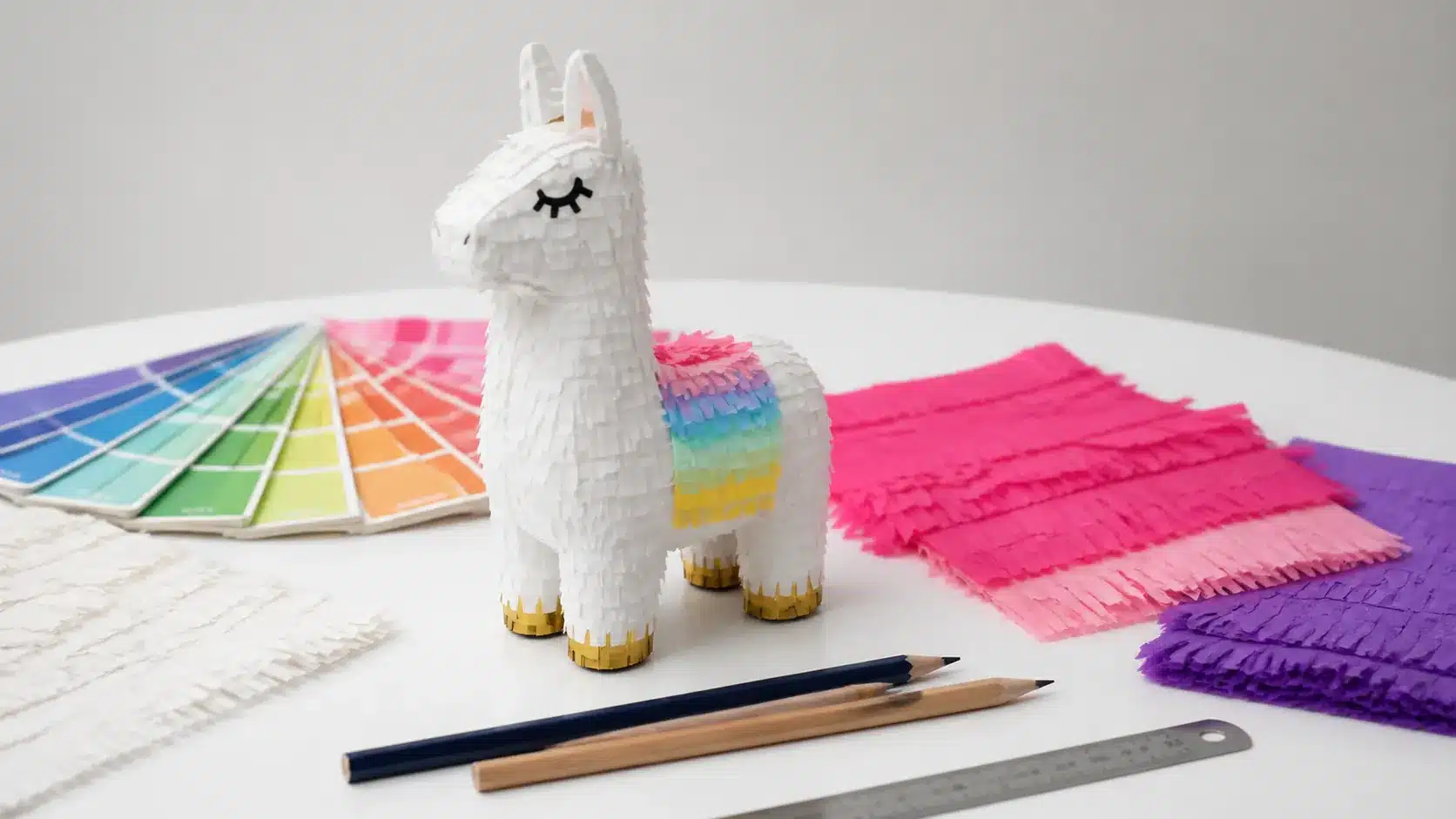
Oliver’s factory view: The best custom brief does not say “make it exactly like the picture.” It tells us what customers must recognize first, how the pinata will be used, and which details the buyer is willing to simplify to protect structure and packing.
On this page
Design for paper, gravity and handwork
About 80% of our production work is manual. Colored paper is cut, fringed and glued by hand, and complex shapes need people to form, support and decorate them. That gives the product its character, but it also means the sample should define an acceptable handmade range rather than promise molded-plastic uniformity.
Thin arms, antennae, horns and script letters deserve early attention. A detail with a narrow connection may bend during hanging or consume disproportionate carton space. Sometimes the better solution is to represent it with surface color instead of a raised structure.
A food image can be interpreted as a simple theme or a close replica; this guide shows how to translate a food reference into a buildable pinata shape before sampling begins.
- Widen fragile connections that carry visual weight.
- Shorten protrusions that add carton risk without improving recognition.
- Use surface paper for details too small to build repeatedly.
- Confirm balance and hanging orientation before decoration is finalized.
- Keep the filling opening usable after decorative layers are added.
Use one controlled sample route
A first sample should answer the main structure and appearance questions. Our normal sample window is commonly 3–7 days depending on complexity. One revision is included in the current route; an additional structural change may require a new review because it is no longer a small correction.
Approval can be completed with photographs, video or the physical sample. Remote approval works well when the buyer has clear front, side, back and detail views. A physical sample is more useful when scale, balance, surface feel or the packing method cannot be judged reliably on screen.
Write down what changed. The approved sample is not only a product; it is the production reference that connects the artwork, measurements, colors, mechanism and accepted simplifications.
A reveal product makes the distinction especially clear: see why a gender-reveal pinata needs function-first approval before the color palette is treated as final.
Color needs its own record inside that sample route, especially when paper, fringe direction and light affect the result. Our color-matching guide for custom pinatas explains what to send and what the sample can realistically prove.
Plan bulk production around the approved interpretation
In bulk production, the team should not return to the original artwork and make a second interpretation. Early pieces are compared with the approved version, and important dimensions, silhouette, color blocks, attachment positions and functional points are checked before the same error is repeated.
Small differences in paper overlap or fringe spacing will remain. A wrong shape, missing attachment, failed hanging point or incorrect logo interpretation is not ordinary handmade variation. The QC plan should make that distinction clear.
Customer artwork and unique custom designs remain confidential. We do not need to publish another buyer’s order to show the process. Your own approval record is more useful evidence than a gallery of unapproved customer logos.
Let the shape and packing develop together
A custom piece can be approved visually and still become expensive to ship. Large empty volume, protruding parts and delicate fringe affect carton orientation and units per carton. That is why packaging cannot be standardized before the design is known.
Ask for a trial pack or clear packing photographs after the sample is approved. The final packing sheet should show individual protection, units per carton, dimensions, gross and net weight, marks and total carton count.
If the buyer has a maximum shelf depth, carton size or warehouse limitation, share it during design development. A small structural change made before sampling can save much more than a rushed packing change at the end.
Example: simplify a logo without losing the brand
Suppose the artwork contains a bold outer symbol and a thin wordmark. Building every letter as a raised paper part would make the product fragile and visually untidy. The sample keeps the strong outer silhouette, uses the approved colors and represents the wordmark as a flatter surface treatment.
The buyer checks recognition from the intended event distance, then approves the simplified version. Bulk pieces are compared with that physical interpretation, not with every line in the original screen artwork. The result is more repeatable and easier to pack without making the logo unrecognizable.
When the product is tied to a launch date or live event, turn the corporate event idea into a one-page production brief before choosing the most complex custom route.
Related buyer resources
- Custom Logo Pinatas for Brands and Corporate Events
- Custom Shaped Pinata Process: Artwork to Production
- Pinata Packaging and Carton Planning for Irregular Shapes
Show us what the customer must recognize
Send the artwork, target size, quantity, intended use and must-keep features. We will identify the details that can stay, the parts that need support and the decisions that belong in the sample.
Frequently asked questions
What file format should I send?
Send the best file available first. The sales manager will confirm which production-ready artwork format is needed after reviewing the design.
How many revisions are included?
One sample revision is included in the current process; further changes are reviewed for cost and timing.
Can I approve by video?
Yes. Approval may be completed by photo, video or physical sample, depending on what the order requires.
Is the sample fee refundable?
An eligible sample fee may be deducted from the bulk order. The quotation should state the exact condition.
Will you publish my custom design?
Not without permission. Customer identities, artwork, quantities and launch information are treated as confidential.