
If a supplier calls one product mini and another small, do not assume those words describe a shared industry size. Ask what the product is meant to do, then compare the finished dimensions, opening and pack of the exact references.
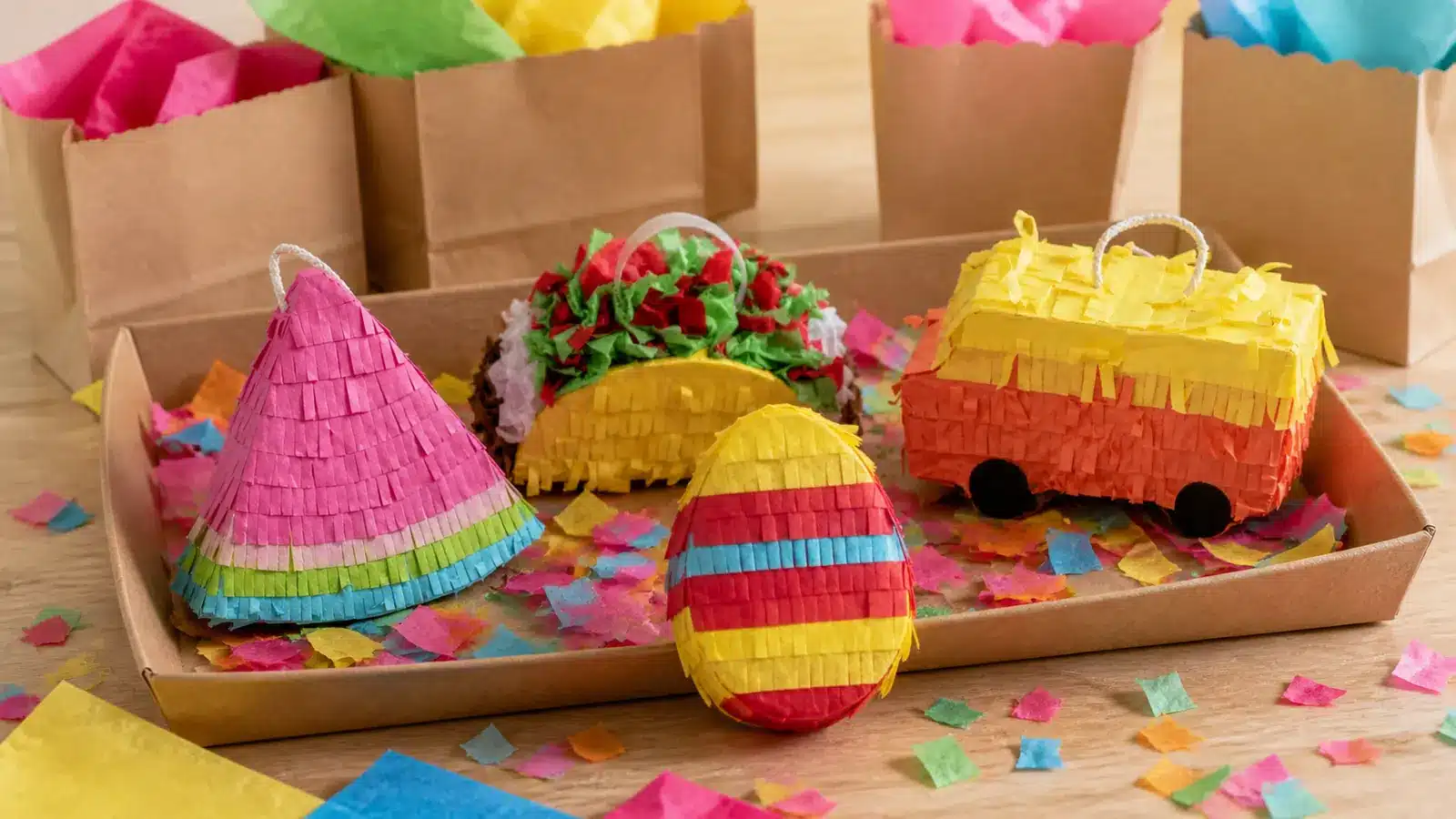
For retail buyers, the useful difference is usually the role. A mini pinata may be sold as a favor, table decoration, gift container or pack component. A small pinata may still be compact but large enough to become the main party activity. Those jobs create different questions even when the photographs look similar.
Mini animals, eggs and spring shapes often enter Easter ranges as favors or table products rather than the main activity. See the Easter buying guide before choosing the size and pack by appearance alone.
The opening matters as much as the outside. A tiny product can look charming and still be frustrating if the intended candy or gift will not pass through the fill hole. A playable product also needs enough internal space, a suitable hanging point and a construction matched to the way guests will use it.
Packing changes too. Several mini pieces may share one selling or master pack, while a small 3D design may need individual protection. Because pinatas are hollow and light, the most important logistics figure is often carton volume rather than weight.
In this guide
Use the job to define mini and small
Start by writing one sentence for the product: “This is a table favor that holds two small items,” or “This is the activity pinata for a children’s party.” That sentence tells the factory what must be tested and tells the retailer where the item belongs in the range.
Next, compare three dimensions rather than one headline height. A narrow guitar, round animal head and deep box can share a similar height while offering very different usable space and carton fit. Ask whether ears, tails or fringe are included in the measurements.
Finally, confirm how the item is sold and filled. If staff or event organizers must fill hundreds of mini pieces, opening size and labor become commercial issues. If the customer fills one small pinata at home, the retail instructions and access point matter more.
Compare the two roles on the same brief
| Buyer question | Mini role | Small role |
|---|---|---|
| Main use | Favor, table piece, gift container or decoration | Primary party activity or compact display item |
| Capacity check | Test the exact small item that must go inside | Test the planned candy mix and usable cavity |
| Packing question | Pieces per inner or selling pack | Individual protection and units per carton |
| Retail decision | Pack price, filling labor and impulse display | Event value, mechanism, storage and reorder depth |
Example: the cheaper item can require more handling
Imagine an event supplier needs 300 favors. A mini design is smaller and uses less material, but somebody must open, fill, close and place all 300 pieces. The buyer should test that job with the real contents before deciding the format is efficient.
For the same event, 20 small pinatas might be used as group activities. They require more carton space, yet the preparation work per guest may be lower. Neither route is automatically cheaper when filling labor, transport and event setup are included.
A sensible quotation therefore lists the exact reference, finished dimensions, quantity per design, intended contents and pack request. It does not rely on the words mini or small to carry all of that meaning.
Compare the selling unit as well as the product unit
A mini item may be quoted by piece but sold in a pack of four, six or twelve. That pack changes the barcode, inner protection, retail price and the number of customer choices created by one carton. Ask the factory to show the product quantity and the proposed selling-unit quantity separately so the team does not discover a pack mismatch during label preparation.
For a small activity pinata, the selling unit is usually one product, yet the store may need a hook, shelf or hanging display that supports the finished depth. Put both formats into the same landed-cost view: factory unit, pack material, carton cube, filling or handling labor and the retail role. This prevents a tiny item from being treated as automatically simple and a larger item from being rejected only because it occupies more space.
How I would compare them at the factory
I would put the intended contents beside the sample and try the complete job. Can the item be filled without damaging the fringe? Does it stand or hang as promised? How many pieces fit the proposed carton? A size label is only useful after these practical questions have been answered.
Do not let a size word hide these decisions
- The buyer expects a playable pinata but receives a favor-sized opening.
- Mini pieces are approved empty and become slow to fill at the event.
- Only height is compared, while depth creates most of the carton volume.
- A multi-piece selling pack is discussed after the product has already been sampled.
- The same quantity is ordered for every design without checking the retail role.
Send the contents with the product request
A reference photo alone cannot show whether the format will work. Include:
- Product reference and quantity per design.
- Finished-size target or space limit.
- Exact intended use: favor, display, gift container or party activity.
- Typical candy or gift dimensions and approximate amount.
- Individual pack, inner pack and barcode needs.
- Destination, required date and available storage space.
Frequently asked questions
Is there a standard size for a small pinata?
No shared label is reliable enough for purchasing. Compare the finished height, width and depth of the exact product, including any parts that extend from the body.
Can mini pinatas hold candy?
Many can hold small items, but capacity and opening size vary by design. Test the actual contents rather than assuming the outside size tells the whole story.
Are mini pinatas always packed together?
Not always. The selling pack, inner pack and master carton depend on the product shape, finish and retail program.
Which format is better for wholesale?
The better format is the one that fits the buyer’s use, price role, handling and storage. A focused range may include both for different jobs.
Show us what the small product needs to do
If you are choosing between two sizes, send both references and tell us what goes inside each one. We can discuss the dimensions, opening, construction and design-specific packing before you decide which format deserves stock.