
The right custom pinata size is the smallest size that still achieves the intended use, visibility and recognizable detail without creating unnecessary hanging, packing, freight and storage problems.
Buyers often choose one headline height because it is easy to discuss. A real three-dimensional product also has width, depth and projections. Those dimensions control internal capacity, stability and carton cube.
Size should follow the event or retail use. A table favor, ordinary party game, shop display and stage prop need different viewing distance and filling capacity. Larger is not automatically better.
Pinatas are hollow and light, so volume can become more expensive than weight. Increasing one dimension can change the body area, handwork and carton orientation across the whole shipment.
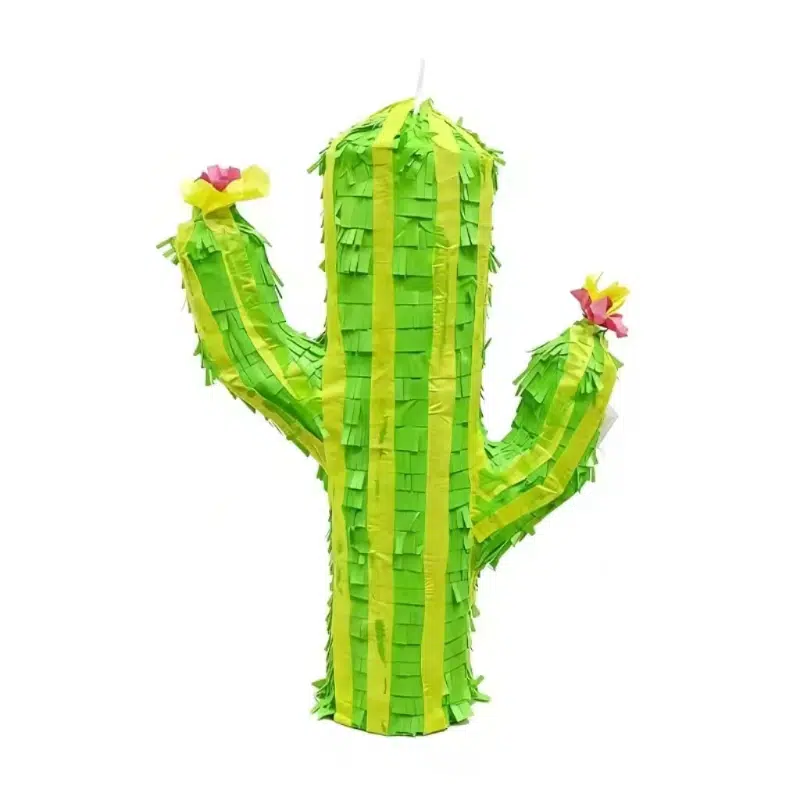
Example: the 80 cm request cannot pass through the setup route
An event team requests an 80 cm product because it sounds impressive. The proposed width and side projection create a carton that will not fit the service lift and is difficult to support in the intended photo area.
The team compares two alternatives: a slightly smaller 3D version and a broader, flatter version with stronger front recognition. The second option reads better in photographs and travels more reliably.
For a retail order, the same review may lead to a different answer. A large feature piece can attract attention, but the buyer carries limited depth and uses smaller products as the replenishment core.
Record the final height, width and depth with measurement points. Avoid descriptions such as “medium” or “about 50 cm” when the carton, price and approval depend on the actual form.
Choose size from use, contents and viewing distance
For a functional product, identify what will be placed inside and how people will interact with it. Outer volume is not the same as usable cavity, especially when internal support, narrow openings or shaped sections reduce space.
For a display or photo prop, set the main viewing distance and compare the proposed dimensions with a person, table or stage. This catches a design that is technically large but visually weak because the proportions are wrong.
Then test logistics: carton, doorway, lift, warehouse rack and hanging point. A size that fits the visual brief but not the delivery route must be revised before the sample becomes final.
What I would protect first
When we discuss size, I ask what the product must do. If the answer is “look large in photos,” width and silhouette may matter more than depth. If the answer is “hold these items,” the opening and usable cavity matter more than the headline height.
Choose size around the event, contents and transport
| Purpose of the size | What to measure | What to check |
|---|---|---|
| Mini favor | Hand-held or table use and small contents | Prioritize usable opening and individual pack |
| Party game | Participant count, fill plan and hanging area | Confirm full dimensions and function |
| Retail display | Fixture and back-room limits | Balance visibility with carton depth |
| Event prop | Audience distance and venue access | Check support, doorway and transport route |
One dimension can hide the expensive part of the shape
- Height is approved while width and depth remain undefined.
- Internal capacity is estimated from outside volume.
- A protrusion becomes the largest carton dimension.
- The hanging or display structure is added after scale is final.
- The buyer scales artwork up without increasing weak supports.
Send a three-dimensional size brief
A familiar object or person in the reference image helps, but still provide numeric measurements and the intended method.
- Target height, width and depth plus all important projections.
- Measurement points and any dimensions that may flex.
- Intended contents, approximate fill weight and opening need.
- Viewing distance, display, hanging or standing context.
- Doorway, lift, fixture, rack or carton limits.
- Quantity, destination and whether freight cube is a priority.
A headline size does not tell the whole story. A tall design and a wide animal can share the same height while using very different carton space and holding different amounts of candy. Ask which points are included in the measurement and whether legs, ears or hanging parts extend beyond the body. If the pinata will be filled before hanging, consider the contents as well as the empty product. The right size works in the room, carries the intended contents and still travels through the buyer’s storage and delivery route.
Choose the size with the event and carton in mind
A familiar object or person in the reference image helps, but still provide numeric measurements and the intended method. Start with target height, width and depth plus all important projections; measurement points and any dimensions that may flex; intended contents, approximate fill weight and opening need.
Frequently asked questions
What is a standard custom pinata size?
There is no universal size for every use and shape. Choose finished dimensions from contents, viewing distance, interaction, packing and storage.
Does a larger pinata hold proportionally more candy?
Not necessarily. Internal support, body shape, opening and usable cavity affect capacity. Test the intended contents or provide a realistic fill plan.
Which dimensions should be approved?
Approve height, width, depth and important projections with clear measurement points.
Why does size affect freight so much?
Pinatas are light but bulky. A small increase in several dimensions can increase carton volume and reduce units per shipment.