
A low pinata MOQ is useful only when every chosen design still has enough quantity to manufacture, sell and reorder sensibly.
Most mid-sized buyers are not trying to buy the smallest possible order. They are trying to avoid two expensive mistakes: too much stock in an untested design and too little quantity in every design to produce or sell efficiently.
Pinatas make this balance harder because they are handmade and bulky. A wider assortment creates more material groups, samples, labels and cartons, while the warehouse fills faster than the scale weight suggests.
The practical MOQ conversation therefore begins with quantity per design. The grand total is useful for budgeting, but it does not tell the factory how many times the production team must change shape, color or packing instructions.
Why one total quantity can hide ten small production runs
Six hundred units of one donkey design and six hundred units divided across six unrelated designs are not the same order. The mixed order needs several shape references, color groups, counts and packing records.
A new custom structure creates more work than a proven catalog item because it needs feasibility review and sampling before it becomes repeatable. Private-label packaging can create another minimum when labels, bags or boxes have their own production quantities.
| MOQ driver | What changes |
|---|---|
| Design | Separate shape and approval reference |
| Color | Material preparation and version control |
| Custom structure | Sample work and repeatability |
| Retail pack | Label, barcode, bag or box minimum |
| Carton multiple | Practical order increment after packing is known |
Build the MOQ request one sellable SKU at a time
Before asking for a lower minimum, make the proposed assortment visible. A factory can give a more useful answer when every design, color and packaging version has its own row.
- List quantity by design and color, not only the purchase-order total.
- Mark catalog products, new custom shapes and repeat orders separately.
- Add the label, barcode or individual-pack version for each SKU.
- Show the storage limit and the date by which seasonal stock must be sold.
- Ask for quantity breaks only on products you are genuinely able to stock more deeply.
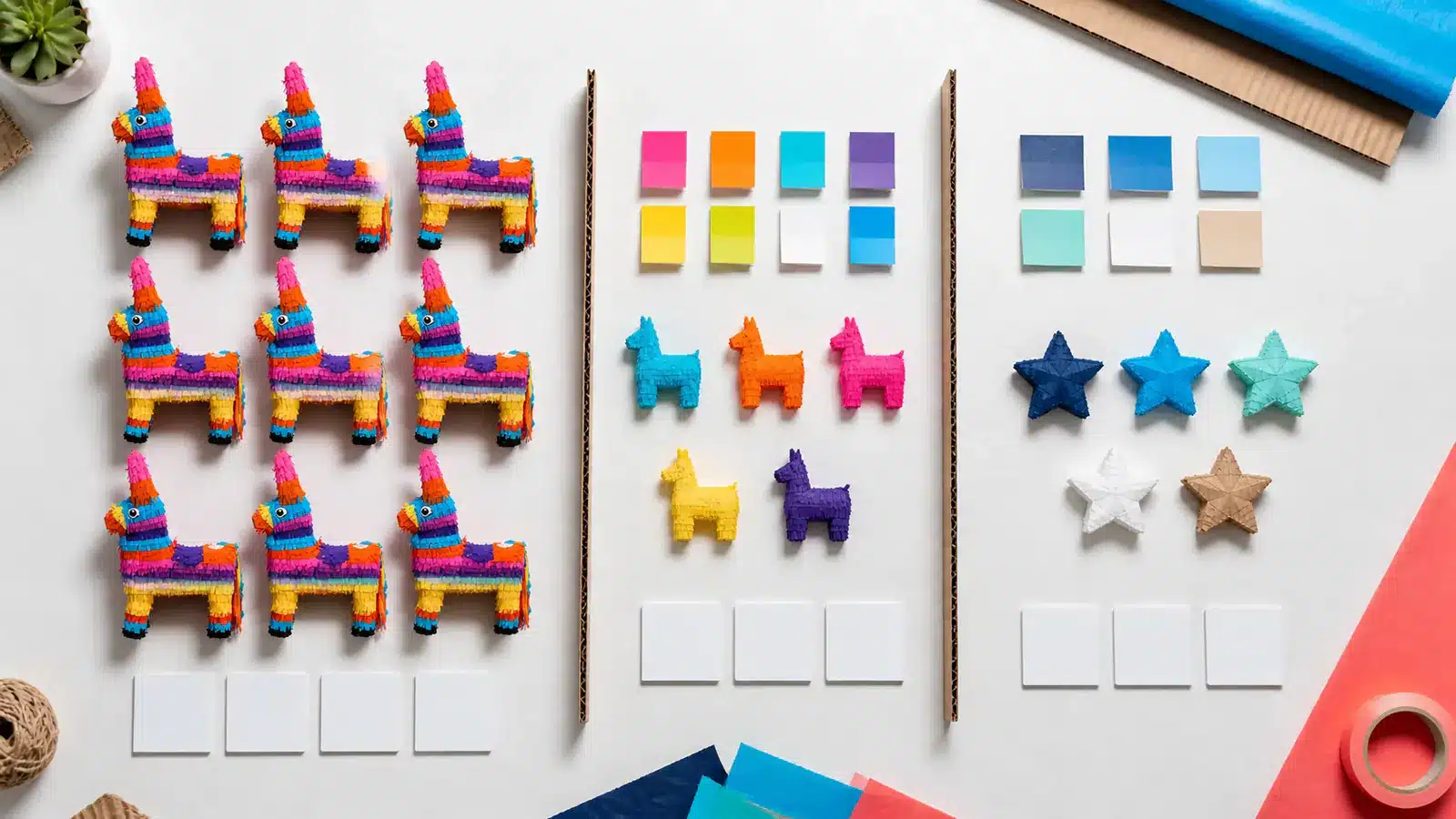
Oliver’s factory view: When a buyer asks for ten designs at the minimum quantity, I first ask which three designs they would reorder if they sold quickly. That answer usually shows where the opening order should have more depth.
Build a first order around product roles
Start with products that cover different customer needs rather than many designs that all serve the same role. A compact plan might include evergreen birthday shapes, one mini favor line, one large statement item and a small seasonal test.
Give proven products more depth and unfamiliar designs less. Keep the number of new custom structures low enough that sampling and approval remain manageable.
- Evergreen products for repeat demand
- A clear size and price ladder
- One or two seasonal tests with a selling window
- Limited custom development in the first order
- Budget reserved for reordering winners
Compare lower MOQ with higher landed cost
Small runs can carry more sample, setup and handling cost per unit. At the same time, a large run can create inventory and storage cost that the headline unit price never shows.
Because pinatas are light and hollow, freight and storage often follow volume. The buyer should compare the saving from a deeper run with the weeks of stock and cubic space it creates.
A realistic pilot is the point where production efficiency, sell-through learning and warehouse limits meet. It is not automatically the supplier’s smallest accepted number.
How to ask for a product-specific MOQ
- Send a SKU table with quantity for every design and color.
- Mark existing items and new custom work.
- State whether units need labels, barcodes or individual retail packing.
- Ask which lines can share materials or cartons and which cannot.
- Request quantity breaks only for designs you are prepared to stock more deeply.
If the proposed mix is too wide, reduce the number of designs before cutting every line to a token quantity. The buyer will obtain cleaner sales data and the factory can give a more dependable answer.
Example: turn twelve weak tests into six useful ones
A retailer originally requests twelve designs at very shallow quantities. After reviewing storage and sales roles, the buyer keeps four evergreen items, one mini range and one seasonal design. Two products are sampled because they represent the main custom and packing risks.
The revised order is easier to approve and receive. More importantly, each SKU has enough stock to produce a meaningful sell-through result. The buyer can reorder winners instead of carrying twelve uncertain leftovers.
Related buyer resources
- Low-MOQ Pinatas for Mid-Sized Retailers: What Is Realistic?
- Pinata Assortment Planning for Retail Buyers
- Pinata Packaging and Carton Planning for Irregular Shapes
Send quantity by design, not only a total
We will review which products can start at a practical quantity, which custom or packing elements create a separate minimum and where the assortment may be too wide.
Frequently asked questions
Do all pinatas have the same MOQ?
No. MOQ is set by product and design. Current catalog pages may show a starting quantity, but the quotation confirms the order.
Can I mix designs to reach the MOQ?
Sometimes, but quantity per design and carton planning still need review.
Why can a new shape require a higher minimum?
New structures add sample development, material preparation and more manual control before the design becomes repeatable.
How should a medium retailer start?
Use a smaller number of strong evergreen designs, add a limited seasonal layer and hold back budget for reorders.