

Seasonal pinata sample lead time begins only after the design inputs are clear. In our current route, reference or sample work commonly takes about 3–7 days depending on complexity, but buyer comments, revisions, courier time and final approval sit outside that one number.
A buyer can lose more time between sample steps than inside the work itself. An artwork file may be missing a side view. Several departments may send separate comments. A physical sample may sit in customs or on a desk before the final approver sees it.
Seasonal products make those gaps expensive because bulk production, packing, freight and store distribution still need their own time after approval. The solution is not to pressure the sample maker at the end; it is to start with a complete brief and one decision owner.
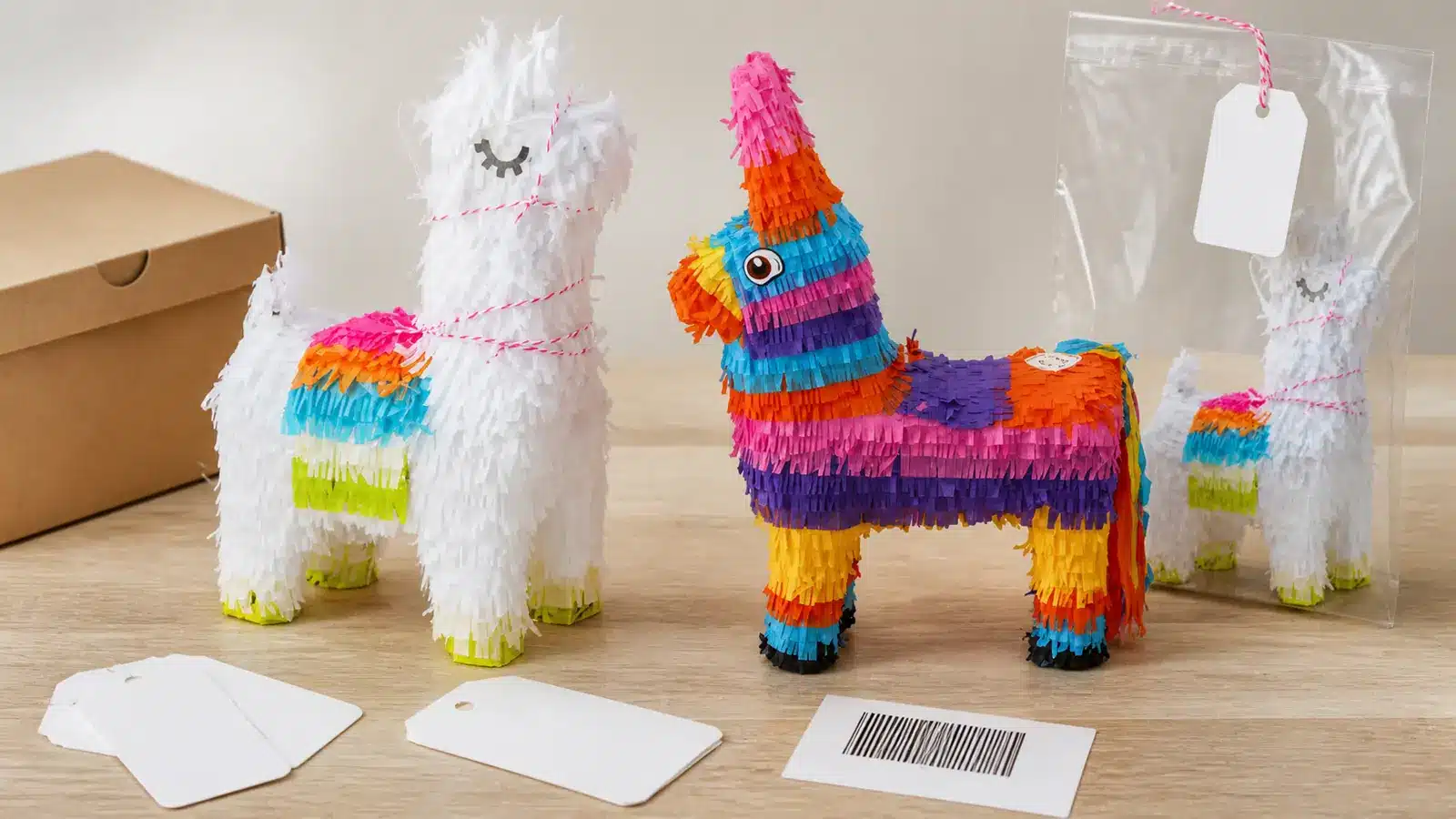
Our current sample route can use photographs, video or a physical sample for approval. One revision is included in the present route, but the actual need depends on what changes. A new size, new artwork or new mechanism is more than a small correction.
In this guide
Plan five clocks, not one sample number
The first clock is input readiness: artwork, dimensions, colors, mechanism, quantity and use. The second is factory interpretation and sample making. The third is buyer review and consolidated comments. The fourth is any revision and reapproval. The fifth is physical courier time when the buyer needs the object in hand.
Choose the approval method before work begins. Photos may be enough for an existing reference or selected visual change. Video helps show mechanism and hanging. A physical sample gives the buyer direct handling but adds transport time.
Freeze the decision after approval. If the marketing team introduces new artwork during bulk preparation, the project has returned to development even if the purchase order already exists.
Put ownership beside every sample step
| Step | What must be ready | Owner question |
|---|---|---|
| Brief review | Artwork, size, use, quantity and deadline | Who answers missing design questions? |
| Sample making | One current approved brief | Who receives progress questions? |
| Buyer review | Agreed photos, video or physical sample | Who combines all comments? |
| Revision | One prioritized change list | Is this a correction or new scope? |
| Final approval | Version name and written release | Who can say the sample is finished? |
The sample calendar breaks between the named steps
- Work starts before a side view or size is agreed.
- Several departments comment at different times.
- A correction list quietly includes new artwork or mechanism.
- Courier and customs time are excluded from physical approval.
- Bulk planning begins before the sample version is released.
Example: a three-day sample becomes a three-week decision
The factory completes a simple reference in three working days. Purchasing reviews the price, marketing reviews the color a week later and the event team then asks for a different mechanism. Another sample is required, and the seasonal calendar has lost much more than the making time.
A better route names one final approver and sends the sample to all reviewers at the same time. Their comments are combined into one list, with must-change items separated from preferences.
The buyer then sees the real schedule: factory days, buyer decision days and courier days are different. Each can be managed only by the team that owns it.
Measure buyer review time after every sample
Record when the factory sent the sample evidence, when the buyer returned one combined comment list and when final approval arrived. If review takes longer than sample making, the next seasonal calendar should begin with an earlier internal approval meeting rather than an unrealistic demand for faster handwork.
Track why revisions happen too. A construction correction, unclear original brief and new marketing request are different causes. The first may require factory improvement, the second needs a better RFQ, and the third needs stronger scope control. This small review turns each sample into a better process for the next thirty articles and the next real order.
Where sample time is usually saved
The fastest sample is not the one we rush before the brief is clear. It is the one where the buyer sends the important views, size, use and color priorities once, then gives one combined answer. Clear input saves more time than repeated urgent messages.
Send a sample-ready brief
Include:
- Front, side and top references where the shape needs them.
- Finished dimensions, mechanism and intended contents.
- Physical color references for priority shades.
- Bulk quantity and seasonal warehouse date.
- Photo, video or physical approval method.
- One comment owner and one final approver.
Protect the sample decision time
Send the design, approval method, final approver and warehouse date. We can explain the current sample route for that project and separate factory work from buyer review and courier time.
Frequently asked questions
How long does a pinata sample take?
Our current reference or sample work commonly takes about 3–7 days after key inputs are clear, depending on complexity. Review, revision and courier time are additional.
Can samples be approved by video?
Yes, photos or video may be used when they show the agreed visual and functional points. A physical sample remains available when direct handling is necessary.
Is one revision included?
One revision is included in our current sample route. A new size, artwork or mechanism may create new scope and should be discussed separately.
When should a seasonal buyer start sampling?
Work backward from the warehouse date through bulk production, packing and freight, then protect time for input, sample, review and any revision.