

When shipping pinatas from China, the container can run out of space long before it runs out of weight.
The hollow body is part of the product’s purpose because the end user needs room for candy, fruit, small toys or other party contents. That same empty space travels from the factory to the buyer and then occupies the buyer’s warehouse.
For some orders, freight can exceed the factory cost of the pinatas. This is not necessarily a sign that the forwarder made a mistake. It is a predictable risk when a low-density product uses a large carton relative to its actual weight.
Our current bulk export quotation basis is FOB. The factory price and FOB handover are only part of landed cost. The buyer still needs final carton data, main carriage, customs, destination charges and warehouse capacity before deciding whether the order makes commercial sense.
Understand why light products are charged by space
Express carriers compare actual weight with volumetric or dimensional weight. DHL explains that the higher figure generally becomes the billable weight because vehicles have limited space even when a parcel is light.
Ocean freight is quoted differently, but the commercial lesson is the same: space has value. A carton full of hollow pinatas can reach the shipment’s volume limit with relatively little gross weight.
| Input | What it tells the buyer |
|---|---|
| Actual product weight | Useful for handling, but incomplete for freight |
| Outer carton dimensions | Space consumed by each carton |
| Units per carton | How product design converts into volume |
| Total carton count | Order volume and warehouse receiving load |
| Protection method | Whether the dimensions are realistic for the approved product |
Give the forwarder one final carton version
Freight comparisons are only valid when every route is priced from the same carton count, dimensions and FOB point. Put a date or version number on the packing file before requesting rates.
- Confirm the named FOB port and what the factory quotation includes.
- Use measured outer carton dimensions and gross weight after packing approval.
- Ask the forwarder to separate main carriage, destination charges and local delivery.
- Check receiving space, stacking limits and the seasonal selling buffer.
- Requote freight if the product mix or packing version changes.
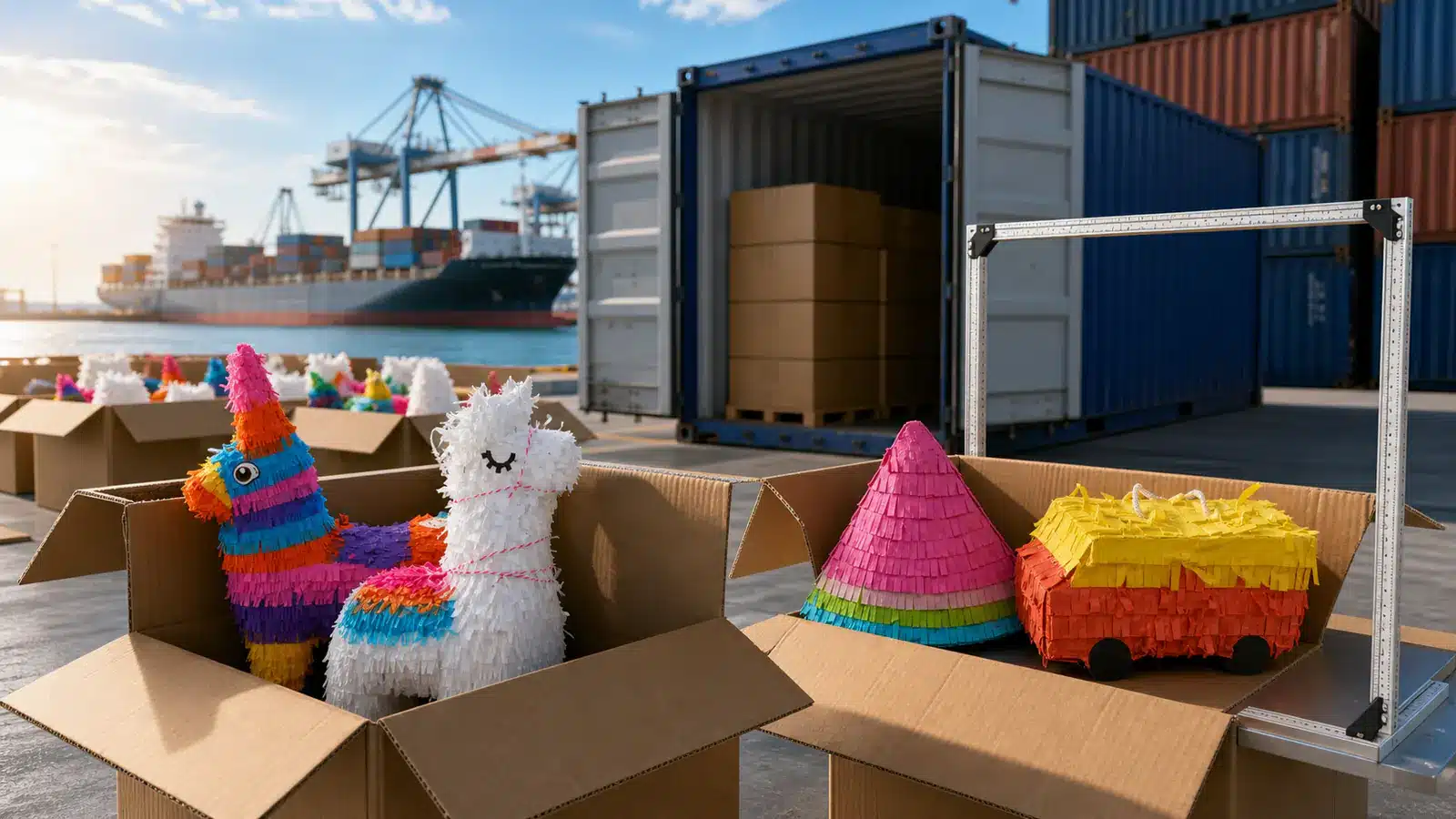
Oliver’s factory view: I do not want a buyer to discover the real volume after the product is finished. If freight or storage is likely to decide the order, we should review shape and packing while the sample can still change.
Build the shipping file from final packed data
Early estimates are useful for comparing design directions. They are not final booking data. The reliable file begins after the product, individual protection and carton orientation have been approved.
- Carton count by SKU or mixed-carton rule
- Outer length, width and height
- Gross and net weight
- Total cubic volume
- Carton marks and barcode information
- Ready date and named FOB port
The forwarder can use those figures to compare LCL, container options, consolidation or other routes. Maersk lists common dry equipment including 20 Dry, 40 Dry and 40 High Cube Dry, but the suitable equipment still depends on final cartons, route and availability.
Know what FOB includes—and what it does not
FOB should name the agreed port. The factory quotation should state the handover point and the export documents it will provide. Our export documentation can include the commercial invoice, packing list and other agreed shipment documents.
The buyer or appointed forwarder handles the main carriage and should confirm insurance, import customs, duty, tax, brokerage, port or terminal charges and inland delivery. These costs vary by market and cannot be replaced with one factory estimate.
If a supplier and forwarder are comparing different carton versions, the freight comparison is invalid. Put the packing version date on the file used for booking.
Plan for the warehouse, not only the port
A shipment can be affordable to move and still be difficult to receive. Ask how many pallet positions, floor locations or cubic metres the cartons will consume and whether the warehouse can protect the product from crushing.
Seasonal designs create another deadline. The goods need time for customs, receiving, distribution and selling before the event. A factory-ready date that leaves no warehouse or retail buffer is not a successful schedule.
- Receiving capacity and carton-count checking
- Maximum carton dimensions for racking or doors
- Stacking limits for irregular paper products
- Time to distribute stock to stores or events
- A markdown or exit plan for seasonal leftovers
Use small orders carefully
Samples and very small orders can travel by courier. Transit options may range from roughly 3–5 days to 7–12 days depending on service and destination, and the exact route should be discussed with the buyer. Many parcel providers can accept the product, but dimensional weight can make the price surprising.
For a first wholesale order, LCL or consolidation may reduce the need to fill a container, yet the buyer should still compare handling, minimum charges, transit reliability and destination costs. “Smaller shipment” does not automatically mean “lower cost per unit.”
Example: when the freight is higher than the goods
A buyer selects several large animal shapes because the unit prices look attractive. The products are light, but their ears and legs prevent tight nesting. After the protection method is approved, the final cartons show far fewer units per cubic metre than the buyer expected.
Instead of cancelling after production, the better approach is to test the packing during sampling. The buyer can reduce the number of large designs, add compact minis, adjust one protruding detail or choose a smaller first order before the factory commits materials.
Related buyer resources
- Pinata Landed Cost: Freight, Duty and Storage
- Large Pinatas Wholesale: Construction, Freight and Handling
- Foldable Pinatas Wholesale: Storage and Shipping Trade-Offs
Send the assortment before you book freight
We will review which designs drive the volume, when final carton data becomes available and what the FOB file will contain so your forwarder can compare the same packing version.
Frequently asked questions
What trade term do you currently quote?
Bulk export quotations are currently prepared on an FOB basis. The quotation should identify the named port.
Can samples go by courier?
Courier options can be discussed. Typical service windows may be about 3–5 or 7–12 days, depending on the service and destination.
What shipping documents are available?
Standard commercial invoice and packing list are available; other documents should be confirmed for the destination and order.
Why does final freight change?
Final packed dimensions, carton count, route and carrier rate can differ from the preliminary assumptions.