
Private label pinatas are a retail product program, not simply a logo, barcode or branded bag added at the end of production.
For one buyer, private label may mean selecting existing factory designs and selling them under the retailer’s own identity. For another, it may include exclusive colors, custom shapes, a coordinated assortment and retail-ready presentation. Those routes involve different development work, approval risk and reorder value.
The first decision is therefore the scope of the program. Which product ideas belong to the range? Which visual details must be exclusive? Which established references can reduce sampling work? And who owns the final SKU, artwork and approval records on the buyer’s side?
Packaging remains important, but it should support the product program rather than define the whole strategy. Because pinatas are irregular and hollow, the detailed pack for each SKU is developed against the approved physical product.
Define what private label covers in this range
Write the program in layers. Product selection answers what the retailer wants to sell. Custom development answers what must be different from existing references. Brand identity answers what customers should recognize as the retailer’s range. Packaging and case data answer how the products reach the shelf and warehouse.
| Program layer | Buyer decision | Factory output |
|---|---|---|
| Assortment | Core, seasonal, test and promotional SKU roles | Product options and feasibility review |
| Product identity | Existing reference, color change or new custom form | Sample route and approved product reference |
| Retail identity | Brand name, SKU, barcode and required market text | Placement feasibility and buyer-approved file control |
| Packaging | Protection, presentation and receiving needs | Product-specific pack and final carton record |
Do not make every layer custom simply because the program is private label. An established structure with an approved color direction and a clear retail identity may be more repeatable than many new shapes developed at once.
Freeze one private-label master file for each SKU
Do not let barcode artwork, product names and carton marks travel in separate message threads. One controlled sheet should tell the factory exactly which identity belongs to each product and pack.
- Use the same SKU in the purchase order, artwork filename and carton mark.
- Name one buyer-side approver who can release the final files.
- Confirm label position only after the product sample establishes the real surface.
- Test barcode scanning and the product inside its actual retail pack.
- Freeze the master file before bulk packing and keep replaced versions out of use.
Oliver’s factory view: A private-label range becomes easier to repeat when the buyer can show why every SKU exists. I would rather begin with a focused group whose samples, files and reorder roles are clear than create many nearly identical designs with no ownership after the first order.
Give every SKU one commercial role and one approved record
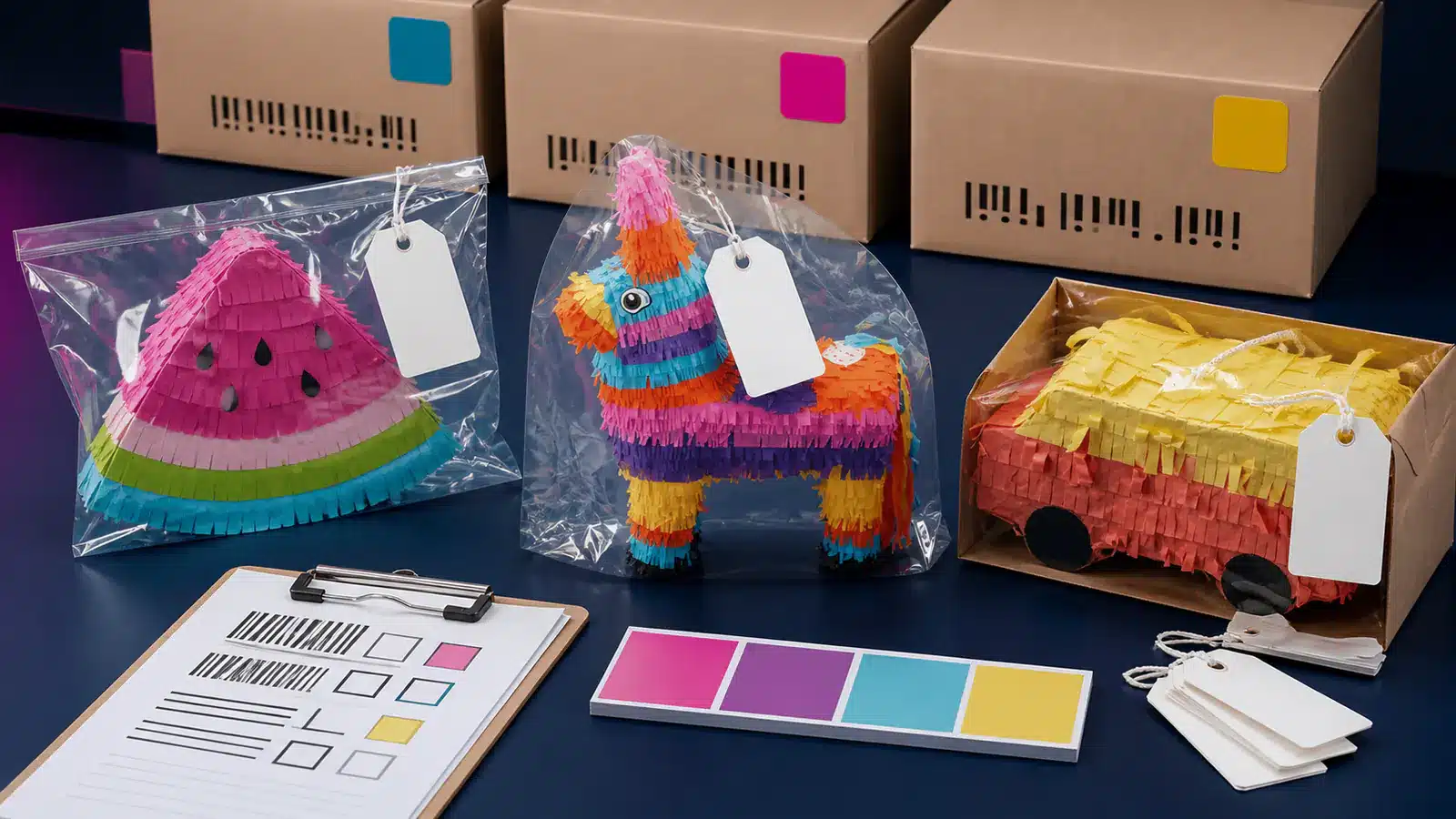
A private-label SKU sheet should explain more than the label. It should connect the product image, range role, quantity, approved dimensions, mechanism, sample version, brand file, retail presentation and carton identity.
- State whether the SKU is core, seasonal, test or campaign-led.
- Use the same SKU in the purchase order, artwork filename and carton mark.
- Record the approved product views and any accepted simplification.
- Mark buyer-supplied artwork as draft or final.
- Separate different barcode markets or language versions.
- Name one buyer-side owner for final release and later reorders.
This record protects the second order. When a successful SKU is reordered, the factory and buyer can return to the same product and file set instead of rebuilding the decision from email history.
Separate product approval from packaging execution
Approve the product idea first: silhouette, dimensions, colors, mechanism, attachments and the acceptable handmade range. About 80% of our production work is manual, so the sample should identify the features that must repeat and the small surface differences that remain normal.
Then fit labels, protection and retail presentation to that approved object. A mini piece, tall number and animal with protruding legs cannot be assumed to share one pack. Our private label pinata packaging guide explains barcode placement, pack hierarchy and final carton approval in detail.
Keeping these subjects separate prevents one article—and one buyer brief—from treating a whole private-label strategy as a packaging exercise.
Keep privacy and proof in the right places
A supplier does not need to expose another customer’s brand to prove it can manage a private label order. We keep customer names, logos, custom designs, quantities and launch details confidential unless the customer gives permission.
The buyer’s useful proof is the approval trail for its own project: range brief, sample views, versioned artwork, label check, pack approval and carton sheet. That record is more relevant than seeing an unrelated famous logo in a supplier gallery.
Example: launch three roles instead of twelve disconnected ideas
Imagine a mid-sized retailer considering twelve private-label concepts. Instead of sampling all twelve, it begins with one evergreen birthday design, one compact favor line and one seasonal item. Each has a different commercial role and a named reorder question.
The retailer approves the three product references, then assigns its own SKU and retail identity to each one. Packaging is fitted separately because their shapes and presentation needs differ. After the selling period, the retailer can deepen the winning role without recreating the entire program.
Related buyer resources
- Custom Pinatas: Design and Manufacturing Guide
- Pinata Packaging and Carton Planning for Irregular Shapes
- How to Request an Accurate Wholesale Pinata Quote
Build a repeatable private-label range
Send the proposed products, role of each SKU, quantity per design, custom priorities, brand files, retail channel and destination. We will separate range, sample, packaging and reorder decisions.
Frequently asked questions
Can a factory produce private label pinatas?
Yes, after reviewing the product range, quantity per design, custom scope, brand files, retail channel and order-specific approval route.
What can private label cover?
It can cover product selection, exclusive colors or shapes, labels, barcodes, retail presentation and cartons. The exact scope should be defined before quotation.
Who approves the artwork and SKU data?
The buyer should provide authorized artwork and name one person who can release the final product and retail files.
Is packaging the same for every private-label design?
No. Protection, presentation and carton data must be reviewed against the approved size, shape and attachments of each product.