
The best way to evaluate a pinata manufacturer is to see whether its answers stay consistent from the first drawing to the final carton.
A polished website is useful, but it cannot prove that the supplier understands a handmade product. The real test begins when you ask an order-specific question: how will this design be sampled, which differences are acceptable, how will the protruding parts be protected and when will the carton data become final?
A factory that answers carefully may sound less impressive than one that promises everything immediately. For a buyer, however, the careful answer is often more valuable because it reveals where the design still needs a decision.
Our current company was established in 2022, while our pinata production work began in 2017. We operate the factory across four work areas totaling about 2,000 square metres and use regular, temporary and peak labor for a product that is about 80% handmade. We do not currently publish a factory-audit document. Those facts should be stated directly instead of covered with generic “professional manufacturer” language.
Verify who is selling and who is producing
Ask for the legal sales entity, production entity, payment beneficiary and the person responsible for the quotation. These names may be different in an export structure, but the relationship should be explained before payment.
Factory photographs and video are useful when they are current and relevant to the product. A small, simple workshop can still be a capable pinata operation because the work depends heavily on people and organized hand processes. Look for actual materials, work-in-process pieces, sample references and packing activity rather than a showroom designed only for marketing.
- Legal company name on the quotation
- Production location and responsible contact
- Payment beneficiary and bank details
- Current factory or work-area evidence
- Export documents available for the shipment
Five proof requests to send before you shortlist a factory
Use one real product rather than a general company questionnaire. The answers should show whether the supplier can connect design, approval, production and packing without changing the story at each stage.
- Ask who will manufacture the product, who will invoice it and who will receive payment.
- Request the sample route, included revision and final approval record for the chosen design.
- Ask which handmade differences are acceptable and which failures require correction.
- Request the packaging assumption now and the point when final carton data will be available.
- State any named inspection, test or document requirement before the quotation is issued.
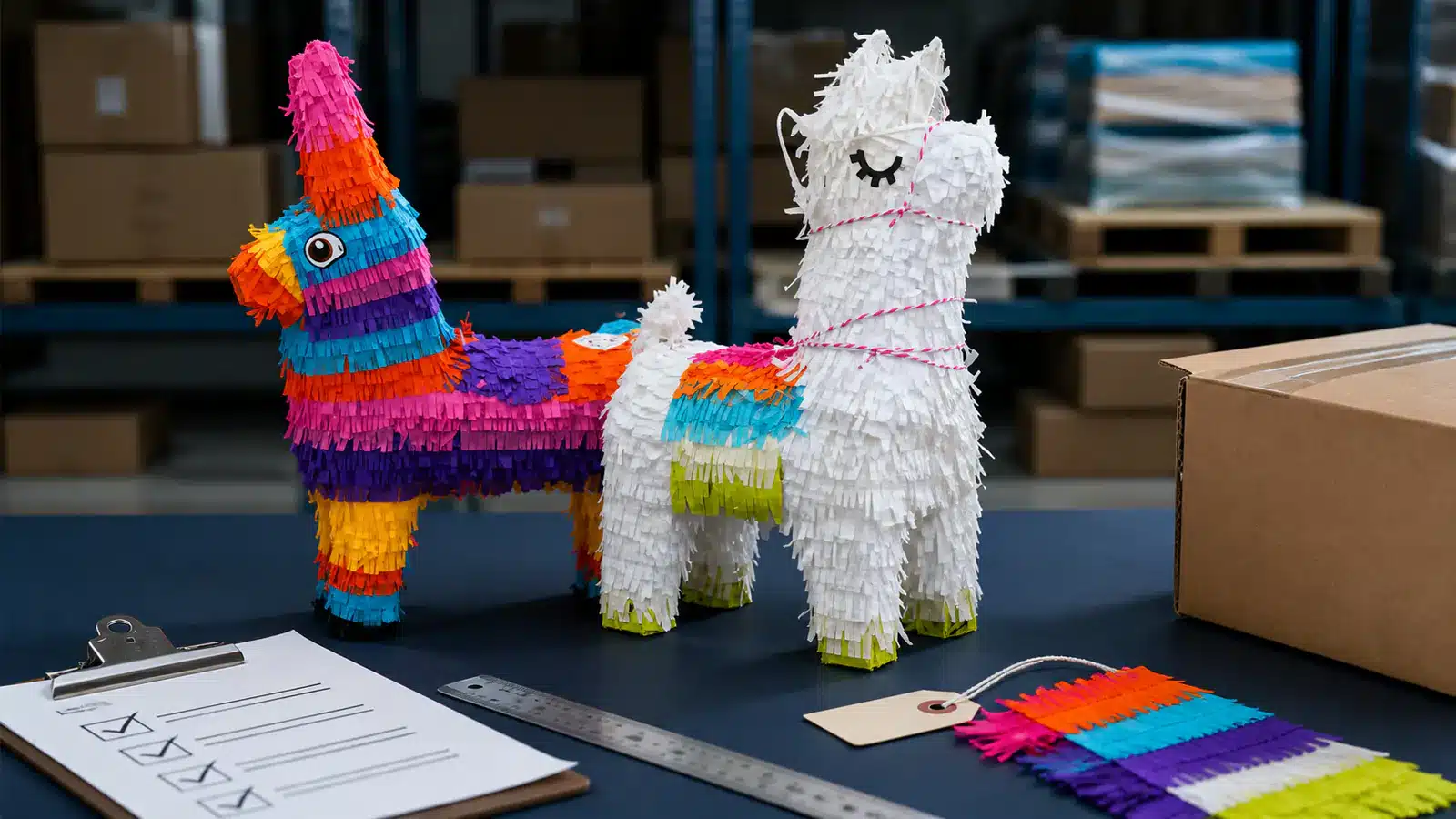
Oliver’s factory view: I would rather lose an order because I explained an uncertain carton or custom shape honestly than win it with a number that changes after the sample. A reliable supplier is not the one with no open questions; it is the one that identifies them early.
Ask the supplier to explain one design from start to finish
Choose a real product and ask how the reference becomes a sample, how comments are recorded, what starts bulk production and how the packing team knows which label belongs to which SKU. A supplier that understands its process can usually explain these handoffs in plain language.
| Stage | A useful answer should explain |
|---|---|
| Artwork review | What information is missing and which details may not be buildable. |
| Sample | Timing, fee, revision, approval views and physical delivery when needed. |
| Bulk production | Which approved reference the team follows and when early pieces are checked. |
| QC | Important function, appearance, count, label and packing points. |
| FOB handover | Named port, documents and when final cartons are available. |
Compare the evidence with the claim
A business license supports identity. It does not prove that a custom sample will match the bulk order. A sample supports product capability. It does not prove the final carton count. A safety report applies only to the product and standard stated on that report.
We do not keep one standing safety report that automatically covers every design. If a destination or buyer requires testing, send the standard and product scope before quotation so the route can be arranged. This is more trustworthy than showing an unrelated certificate beside every item.
Customer confidentiality also matters. A supplier that casually sends you another brand’s artwork, quantity and contact details may do the same with your order. Generic process examples and a controlled trial are safer evidence.
Test communication with a manageable order
A trial should be large enough to test the actual workflow but small enough that the buyer can manage the risk. Two or three representative products can reveal how the supplier handles comments, one revision, approval media, SKU separation and packing.
Do not judge only whether the samples look attractive. Judge whether the supplier asked the right questions, used the latest file and explained changes before making them. Those behaviors will matter more when the order contains several handmade designs.
- Send the same written brief to each shortlisted supplier.
- Compare the completeness of answers before the prices.
- Select representative sample risks, not three similar products.
- Record the final approved version and packing assumption.
- Scale only after communication and handoffs have been tested.
Score the answers a business owner actually needs
A mid-sized buyer normally has limited cash and warehouse space. The supplier should help you understand which designs need depth, which custom ideas are risky, when carton information will be reliable and whether the arrival date still leaves time to sell.
| Area | What a strong supplier does | Warning sign |
|---|---|---|
| Commercial | Quotes the same scope and names exclusions. | Changes the basis when you compare prices. |
| Technical | Explains trade-offs in shape, handwork and packing. | Says every design is easy before review. |
| Approval | Records one current reference. | Relies on scattered chat messages. |
| Trust | Protects customer information and limits claims. | Uses unrelated logos or certificates as decoration. |
| Logistics | Waits for final cartons before firm freight inputs. | Promises container quantity from product weight. |
Example: two factories answer the same question
The buyer sends a character design with thin ears. Supplier A replies with a price and “no problem.” Supplier B asks about target size, viewing direction, whether the ears can be widened, how the product will be filled and whether the buyer needs individual retail packing.
Supplier B has not made the process more complicated. It has shown where the cost and failure risk actually sit. Even before the sample, the buyer has learned more about how that factory will handle the order.
Related buyer resources
- Pinata Supplier Comparison Checklist
- Pinata Quality Control: What Buyers Should Check Before Shipment
- Pinata Packaging and Carton Planning for Irregular Shapes
Test us with one real product brief
Send a design, quantity, target size, packing need and destination. Judge our questions and our written answer before you judge our marketing claims.
Frequently asked questions
Is a factory audit required?
Not always. It depends on the buyer’s risk policy. We do not currently publish a factory audit; buyers who require one should state the standard and scope early.
What is the best first proof?
A product-relevant sample and a documented approval trail are more useful than generic marketing claims.
Should I request customer references?
You can ask, but a responsible supplier may protect customer confidentiality. Process evidence and a trial order can be more appropriate.
How can I verify the factory remotely?
Request a scheduled live video focused on relevant work areas, sample records, packing examples and the people responsible for the order.