
Foldable Ghost Pinata – Flat Pack Halloween Decor – Complete the Set
SKU: PIN-00612
MOQ: 100 units
Size: 6 × 16 × 16 cm
Mechanism: Foldable
View details & quoteBuild the range backward from the on-shelf date, then control design count, samples, packing, freight and leftover-stock risk.
SKU: PIN-00612
MOQ: 100 units
Size: 6 × 16 × 16 cm
Mechanism: Foldable
View details & quote
SKU: PIN-00609
MOQ: 100 units
Size: 6.5 × 13 × 19 cm
Mechanism: Foldable
View details & quote
SKU: PIN-00606
MOQ: 100 units
Size: 5 × 16.5 × 23 cm
Mechanism: Foldable
View details & quote![Mini Halloween Pinata Set [3-Pack] – Cute Spider Favor Box – Table](https://wholesalepinatas.us/wp-content/uploads/2026/01/P09001-768x768.png.webp)
SKU: PIN-00574
MOQ: 100 units
Mechanism: Traditional Break-Open
View details & quote![3D Pumpkin Pinata [Classic Jack-o’-lantern] – 35cm Width – High Capacity](https://wholesalepinatas.us/wp-content/uploads/2026/01/Wholesale-3D-Pumpkin-Pinata-Classic-Jack-o-lantern-35cm-Width-High-Capacity-1-768x768.png.webp)
SKU: PIN-00454
MOQ: 100 units
Size: W 35 cm · H 30 cm
Mechanism: Pull-String
View details & quote![Ghost Pinata [Holding Pumpkin] – Cute Halloween Theme – 45cm Tall](https://wholesalepinatas.us/wp-content/uploads/2026/01/P06007-2-768x768.png.webp)
SKU: PIN-00448
MOQ: 100 units
Size: 9 × 35 × 45 cm
Mechanism: Traditional Break-Open
View details & quote![Halloween Pull-String Pinata [Pumpkin Design] – Safe for School Parties](https://wholesalepinatas.us/wp-content/uploads/2026/01/Wholesale-Halloween-Pull-String-Pinata-Pumpkin-Design-Safe-for-School-Parties-1-768x768.png.webp)
SKU: PIN-00433
MOQ: 100 units
Mechanism: Pull-String
View details & quoteFor Halloween pinatas wholesale, the most important specification is the calendar: a good product that arrives after the selling window has almost no seasonal value.
Seasonal buying compresses every normal sourcing step. Artwork, sample approval, bulk production, packing, ocean or air movement, customs, distribution and retail display all have to finish before customers begin shopping for the event.
The temptation is to solve that pressure by choosing many designs early and deciding details later. That usually creates the opposite result: more samples, more barcode versions, more cartons and more chances for a late correction.
A stronger Halloween program uses a small theme architecture, clear delivery milestones and quantities tied to the weeks the products can actually sell.
Do not build the schedule from a hoped-for transit time. Use the forwarder's current route and allow for the buyer's own receiving process. If the selling date cannot move, simplify the product or choose established designs rather than removing approval.
The receiving date, not the factory start date, controls the program. Add time for warehouse receiving and retail distribution before the first week customers are expected to buy.
Use the receiving and shelf dates as the fixed points, then build the Halloween order date backward from the shelf date.
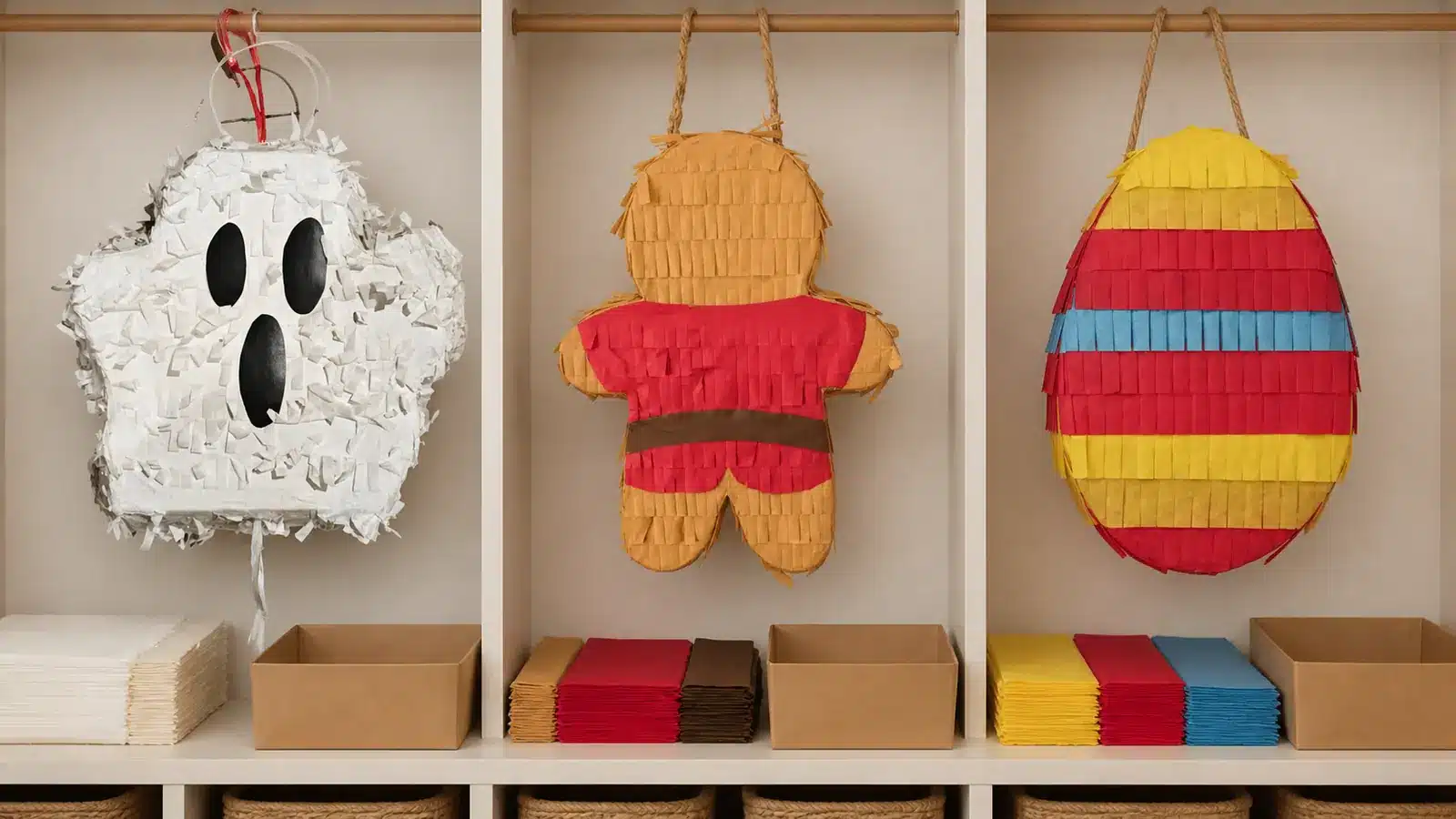
Oliver's factory view: Seasonal orders move fastest when one buyer has authority to approve the sample and files. Waiting for several opinions can consume more time than the hand production itself.
A coherent range may combine one friendly character group, one darker decorative group and one party-game price point. The designs should look different enough to serve distinct customers while sharing colours or merchandising cues.
| Role | Possible theme direction | Buying question |
|---|---|---|
| Evergreen crossover | Black cat, pumpkin or simple ghost | Can it sell beyond one night? |
| Character feature | More detailed witch or monster | Does the higher price justify sample and carton complexity? |
| Mini add-on | Small coordinated favors | How are pieces counted and displayed? |
| Large event item | Statement ghost or themed prop | Can freight and storage support a shallow quantity? |
Choose samples that expose different problems: one new silhouette, one dark/light color contrast, one protruding shape or one special mechanism. A catalog repeat may need reference confirmation rather than a complete new design cycle.
Approve front, side and back views, major colors, size, hanging, filling opening and packing orientation. Freeze labels and barcodes before individual packaging materials are committed.
A quoted sample-making time does not include every approval delay, so plan the full seasonal sample timeline before the program enters production.
Seasonal markdown risk belongs in the buying decision. Use deeper quantities only for designs with a longer selling period or crossover use, and keep highly dated novelty shallow.
Track sales early enough to make a reorder decision while production and freight can still meet the date. A reorder rule made after the peak has passed is only a report.
A retailer orders a pumpkin and black cat as the main volume, a mini ghost favor as an add-on and one large feature design for event customers. The first three use simple, recognizable forms; the large piece receives a dedicated packing review.
The buyer sets an early reorder point for the pumpkin and cat and does not plan to replenish the large piece after the cutoff. The program creates variety without treating every Halloween idea as equal inventory.
Before sending the final line list, review how our wholesale program handles seasonal orders, from sample scope through packing and FOB readiness.
Send the selling window, candidate themes, quantity by SKU, packaging needs and destination. We will build the sample and cargo-ready milestones around the calendar.
Build the plan backward from the required on-shelf date, including approval, production, packing, FOB handover, transit and receiving buffer.
Recognizable themes such as pumpkin, ghost and candy shapes can provide a base, then add market-specific tests.
Only if production and freight can still reach the useful selling window. Set a clear reorder cut-off.
Use a preplanned markdown, event, bundle or carryover rule based on the design’s ability to sell outside Halloween.